4/27/12

Here, Buenos Aires


When we were in Once, the buildings stretched straight up towards the sky and hemmed us in like great walls.  The streets a maze that extended towards infinity in all directions.  If there is an end to the city, I haven't seen it.  We have since moved to Palermo, where every corner is a cafe and the smell of a hundred restaurants keeps saliva in your mouth.  Meat grills, empanadas bake.

Down the streets that are still cobbled run metal rails that once carried cable cars when the city was young and promising.   Great trees line the sidewalks instead of the piles of garbage like the heap of rags that a homeless couple had burrowed into and fallen asleep.

The house is large and international.  The girl from France speaks Spanish with a Porteño accent, and the Brasileña barely speaks English at all.  She is learning and loves to practice with the British couple and the two girls from Seattle.  Nobody really talks to the woman from Korea because she only speaks her own language.  Now we are here in our rooms with our things and our ways, and means.

Argentina has beautiful daughters who know how to carry themselves.

3/22/12

Warmth


This is the story of our youth, written like cracks in the tile that lines the shower.
Don't worry, my dear, don't fret.  These things will hold themselves together.
The season changed from winter to spring in an odd transition that saw all of the cold feeling that I harbored go unrequited.  How could I write great poetry if snow becomes a memory?  White, wet, cold...that is all I remember.  I have photographs though that make me think, perhaps, that there is a beauty in the desolation.  Maybe there are portents in the way the wind moves great clouds of tree pollen through the city, coating everything in a hue that evokes vomit.

There was no way I would be able to dress for occasions anymore.  It is impossible to be fashionable in sweat.  We were doing so well in our coats.

Here now was a girl...a girl because being a girl implies innocence and don't we all wish we were...
Here she is and here we are, beneath an oddly warm sky that beckons interaction.
How long have I known you?  A long time.  A long time. 
God have mercy on everyone, and maybe a little more on me.
The story of our youth is like the cracks in the pavement.  When the road is cool--though it is seldom so--it contracts and pulls within itself as if to indicate that insulation is the whole of being.  Yet, as the sun lingers...heat.  Heat.  Now that same space is expanding in an angry way that ruptures and breaks.  This is the nature of roads.  This is the nature of hearts.


3/15/12

Old Testament Vernacular


There is a magic in the way a people, a place can translate into a sound.  A music that itself embodies its creators so fully that it takes on a new life, like a child born.  I have watched the face of a woman sing with the same unconditional love for her song that radiates from a mother's eyes when she cradles her newborn; warm and fragile and everything we believe when we first hear the word promise.

Sometimes in smoky dens.  The night is lighter outside than where we sit, huddled around a small table within a crowd that shapes like water to its barriers.  The band had yet to play and it was then you called her a Philistine after you had read the words gouged into the black paint of the wall--
Too much sex, too little Jesus.

I held my own thoughts close, because here was a place to marvel.  To listen.  Nothing about our years was a comfort.  Even the little slips of paper that you would drunkenly pass to me from your fortune cookies seemed to mock us.  How could they believe in Ghosts but not in God?  You'd shake a finger at nothing that would unconsciously follow the beat of the bass...the blood in my capillaries...
'The living haunt us.' 

The last thing I hoped for was a dance lesson on a spring night.  Corporal movements lit by bonfire.  Here I stretch out my hand to take yours and we smile.  What happens next will be the contract, and someday when it is cold you will lean up to whisper in my ear...
'This was your promise to me.'  
Then, we will live in each other's eyes, and move, and move, and burn. 

2/16/12

A Business Trip


'I have seen the stars fill the night sky to the rims of the horizon.  Behind them, entire galaxies...though mere visual suggestions.  Like colored whispers that are remnants of when God spoke the heavens into being.'

It was late in the night as we got into the car and headed West.  The highway took us out of the city like a dirty, black conveyor belt of lights.  Somewhere ahead, in the pitch darkness, was nowhere...our destination.  In the quiet night we slipped unnoticed onto back roads, winding into the Heart of the South.

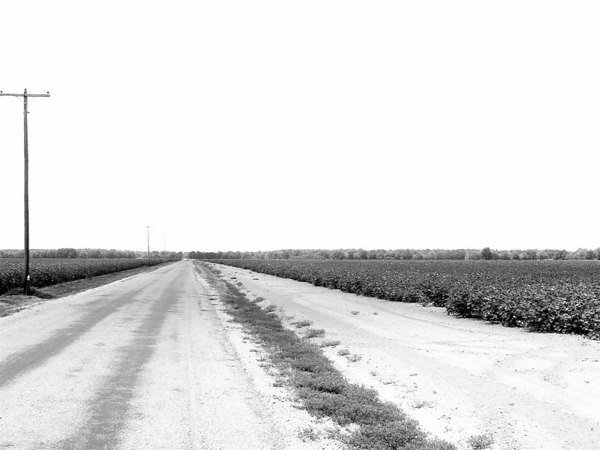
Morning found us in a sad hotel that hugged the north/south bound interstate; a hopeful leech on a Mississippi artery.  We were less than a day from the city, but already we were in a new world.  Familiar, yes, but all the while something known only through old books and the garbled dirges of ancient Blues.  The roads rose up like causeways, the pavement stained the color of rust from the minerals in the soil.  The rumor of rivers was everywhere, in pools of swamp and vast muddy fields that in the warmer months held crops.
The Delta.

Guitar music and heartbreak, and all the long history that is the slow death of dreams played over the radio.
Small towns, and then past them smaller towns until we reached their Jewel.  Here, there were a few stop lights as well as the vestiges of the rural idea of civilization: a strip mall, chain restaurants, a department store.  The Pawn Shop was in the center of the square, which was really only two blocks on parallel streets divided by a narrow park.  A reporter met us as we stepped inside.  The mayor came later to shake our hands.  The Old Man wanted us to eat Fried Chicken, and the best Cornbread in the world.  To them, we were something special.  To us, they were America.

It didn't take long to get what we came for and leave.  Using our cameras to steal their faces, their voices, their stories.  We were an un-looked-for, and visceral hope.  Cotton had been King in that part of the world once...but there was no royalty anymore.  Just pawn shops and poverty.  And Blues.

The roads wound us away once more through darkness that was the loneliest thing in the world.  The only lights were our headlights and we were the only people in the world.  It was hours towards the East when the moon loomed unannounced around a corner, enormous and low on the horizon, just above the trees.  It was the color of dried blood.

I talked about how all that darkness and all that quiet was making me think about my life.  How that highway back to the city was probably a metaphor, and I was scared of it.
'Close your eyes and think of your God.'
And then all you see instead is a pretty girl you once knew.


2/4/12

Del corazón


Del corazón
by John Milton

He sat on the edge of his bed and balanced his cell phone in the bowl of his cupped palms. He had the numbers in place, sequenced just so, and all that was needed was the push of the send key. Yet that one button, the last button, was the only one that mattered; the only one that mattered and the hardest for him to press. The more he waited—the more he sat rolling thoughts about in his mind from one end to the other—the more his heart pounded in his chest until all he could hear was the dull thump of blood…rapid, and incessant.

Two days earlier Sam had stepped off of the airplane at the Aeropuerto de Almería with nothing but his pack and an idea of Spain. Everything that he had left behind in the States called to him in echoing voices that made a home in the back of his skull, behind his eyes and inside his ears. He concluded that the first thing he needed to do was find a drink.
He discovered a pub where he could slap his pack down on the floor and pull up a chair next to a grizzled Granadino who sipped his wine with an air of severity, as though each sip was tantamount to his entire existence.
“Habla Ingles Usted?” He offered to the camarero. He received an affirming nod that led him to ask for a carafe of whatever the old man was drinking. The camarero smiled and stepped around the bar and into a back room. The Granadino held his glass up in a salute to Sam then downed the dark fluid. He smacked his wet lips loudly as the camarero returned and placed a brimming carafe and glass in front of Sam on the bar.
“You have made a wise choice.” The Granadino said in a low voice that vibrated like tires over gravel. Sam poured himself a glass then proffered the carafe.
“Join me?”
The old man smiled.
“You are a man who knows how to fast make friends in España.” He slid his glass over to Sam, who filled it and slid it back.
“Salud.”
“Salud.” They each drained their glasses. Sam refilled.
“Tell me, my new friend, are you on holiday or business?”
Sam thought a moment, then shrugged his shoulders.
“I suppose you could say business. I'm chasing a girl.”
The Granadino chuckled and shook his head.
“Los juegos de los jovenes.”
Sam mouthed the words to himself.
“Yes. Games.”
“Does she know you have come for her?”
Sam shook his head and then gulped the remainder of his wine.
“No. She knows I’m in Spain, but not that I’m in Spain for her.”
“Ah, sí. So you have come here to drink instead of going to her, because…”
Sam sighed and tapped his glass rhythmically on the bar.
“Because I’m scared to death.”
The carafe was twice empty during a period of silence.  Then, the Granadino placed his hands on the edge of the bar and slowly pushed himself back. He then stepped from his stool and placed a hand on Sam’s shoulder.
“Vamanos. I have something to show you, if you will see it.”

The two men stumbled along down the stone-lined alleyways that wound erratically along the contours of the terrain, down past solid blocks of sandstone dwellings and deep into the heart of Almería. The Granadino fumbled along ahead, his pebbly basso bouncing off the close walls as he sang the praises of El Cid in battered Arabic and Spanish mixed. Sam struggled to keep his legs beneath him. Suddenly the old man ducked left and disappeared into an open doorway. Sam froze and grabbed hold of his head, forcing his eyes to explain themselves, when the Granadino’s voice boomed from insides the walls.
“Here, come here!”
Sam cautiously stepped towards the echo of the voice and found himself sinking deep into the darkness of an unseen room, his ears guiding his feet as he followed the continued singing of the old man. Soon Sam became aware of an emerging glow that seeped in from some back doorway; daylight that stole into the confines of the cell. Sam reached forth and pushed open the door. Immediately he was engulfed once more in the sun as he stepped forth into a walled-in plaza.
There sat the Granadino, encircled by a group of three other men and each of them clutching onto a different instrument: one a cello, one a guitar, one with castañuelas, and the old man himself with a trumpet. The Granadino waved Sam forward.
“Come, sit.” He patted his hand on the bench next to him. Sam eased himself down. The Granadino was so near that Sam could hear his labored breathing, smell his sickly sweet odor of too much wine and too thin blood.
“These are my friends.” Then to the men, “Amigos, éste es un muchacho que juega a juegos con amor.”
Sam hiccupped and the men laughed. The Granadino pointed to each man and recounted his name.
“Hola,” Sam said to each, and the men laughed more. The Granadino held up his hand for silence. His face became serious.
“We have a game we play as well, joven. We are old—”
“Lo dirás por ti!” Said one. The others slapped his back and expressed their concurrence. Again the Granadino held up his hand for silence.
“Por favor, gracias. We are old and have seen much, lived much, learned much. To us, words no longer mean as much as they did in our youth. Often now, we do not trust words at all. Soon too, you will see, in your game, that words fail you…and for you, maybe you think, much is at stake.”
“Happiness.” Sam said, now solemn. The Granadino shrugged.
“Si, and no. Now, watch our game.” He stood and slowly raised the trumpet to his lips.
“Del corazón,” he whispered. Then he played…
Long, mellow strains emit from the horn and lift into the stillness of the afternoon heat. The Granadino’s cheeks invert and expand as each note is tenderly brought to life through his lips. Sam closes his eyes and as he does, the sound of the cello begins to creep up behind the trumpet. The deep melancholy of the strings vibrates in the air and Sam slowly opens his eyes. The castañuelas begin like the rapid heartbeat of an infant.  The Granadino pauses and lowers his trumpet. He nods to the man with the guitar, and with the beat of the castañuelas clicking like the hooves of a stallion on cobble stones, the two join in together. Sam cannot find his breath as the music rises around him. An eternity passes in a moment and the music slowly dies as the sun falls from the sky. Sam closes his eyes once more, and is asleep…
It was the ticking of an ancient Swiss clock that woke Sam. He was disoriented and confused. He dragged his dry tongue through a mouth that seemed made of paper. There was a shaft of light coming from somewhere that fell upon his face where he lay, reclined on a long cushion. He forced his eyes to open wide and focus, and as he did The Granadino swam into view with a knowing grin.
“Mi amigo, cómo estás, esta mañana?”
Sam pushed himself up on one elbow and rubbed a hand across his face.
“Sorry, what?” He mumbled.
The Granadino laughed and as he did he seemed to vanish from the room. The laugh followed him as he disappeared, echoing in Sam’s throbbing skull. Then the laugh seemed to grow louder again, and Sam sat fully up as the old man once more materialized. In his hands were a clear glass filled with water and some sort of bread. The Granadino took a seat beside Sam on the cushion and handed over the bread and water.
“El hombre no puede vivir sólo de pan. But it helps.”
Sam drank the entirety of the water and then nibbled at the bread. The two men sat in silence as the sounds of Almería stirring wafted in through unseen portals. Finally, Sam sat his glass down on the floor and stood.
“I don’t think I could explain what I felt last night. What it meant. Was that the point?”
The Granadino slapped both of his hands down on to his knees and rocked backwards, laughing heartily.
“Perhaps yet, mi amigo, you will make a truly wise man.”
Sam smiled then extended his hand. The Granadino righted himself and rose, clasping Sam’s hand and pulling him into an embrace.
“Del corazón?” Sam whispered. Unseen to him, The Granadino smiled solemnly.
“Del corazón.”

She lived on the third floor of an ancient apartment building near Cabo de Gata. He had found that much out before even leaving his country. Yet, when he finally stood outside, looking at the terraces and the vaults, his knees lost all resolve and seemed to abandon the legs with which they had been previously allied. He could not think of moving, nor of her name, nor least of all del corazón.
An old woman exited the building carrying on her shoulder a basket filled with freshly baked loaves of bread, and seeing the poor boy rooted to the pavement, took pity and offered him his choice of her goods. She searched Sam’s face with her eyes, and he could not help but smile. At first, he politely refused to take any bread, but the vieja was insistent and Sam knew that it would be rude to refuse. He reached into the basket and selected a moderate, round loaf that still felt warm and smelled of a home Sam did not know, but was sure he would recognize.
“Gracias.” He said.
She smiled and reached a weathered hand up to his face and placed it on his cheek. Sam saw then that she had seen right through him, and that for all his postulating, and all his guardedness, he was an open book. The vieja removed her hand and turned to leave, carrying away her bread to nourish others.
Sam stood now, holding onto his loaf and thinking of how in two days two strangers had perceived his true self as though it were worn on his sleeve, and had seen fit in both instances to feed him bread.
“España.” He muttered, before turning at last to trudge the long winding roads back to his hotel.

That brought him at last to the place where he was certain that if anything was to happen, he would make it happen. If anything was worth having, he would have to take it. If anything had brought him to Spain, it was her and for two days he had learned this and there could be no third day or the lesson was lost and he might as well return home. Thus, sitting in his hotel room, with his heart beating in his throat, he finally entered the last digit, the only one that mattered, and made the phone call.

She had laughed when she heard his voice, and he was immediately disarmed. They spoke briefly, for she had far too much excitement to waste it on the telephone. He had come all the way to Spain, just for her, and nothing more romantic had, or would happen in her short life. He was in her city, near the desert that her heart prayed to every morning, and they must at once see each other. He had been there for two days? Why had it taken him so long to contact her? She could not understand his fear, nor the journey he embarked on to learn of del corazón.
In truth she would never understand him, and he would never fully come to grips with who she was as a person, or how all the years before they had met had layered upon her soul a restlessness that could only be satisfied with ideas of love, and of destiny, and of deserts. Never the things themselves. Sam could not know then, that instant when they finally dashed across the Plaza Major to crash into an embrace that she was only the beginning of the story that would be del corazón. When Spain grew too small for them, and they too small for each other, and all the planets would bend between them, they would look back on that night and what it meant. The small victory in Sam’s eyes, the fulfillment of some unlooked for dream in hers.

Ten years later Sam was sitting in some high, nameless place where few people lived, and hard. She was long since gone and his memories were stored like water in a plugged barrel. Now he hears the long, mellow strains emit from the horn and lift into the stillness of the evening cool. Now the deep melancholy of the strings vibrates in the air and he slowly opens his eyes. The castañuelas begin like the rapid heartbeat of an infant. Now the guitar, and with the beat of the castañuelas clicking like the hooves of a stallion on cobble stones, they join in together. Sam cannot find his breath as the music rises around him. An eternity passes in a moment and the music slowly dies as the sun falls from the sky. Sam closes his eyes once more, and is asleep…

2/3/12

Your Friends Are Stones


It is a hard road that winds up out of the desert into the Altiplano.  As oxygen becomes thin, and the cold closes in around you, it is an easy place to die.  You sit and look at your hands, chapped and cracking in red lines that want to bleed but cannot.

They won't find my body here,
you whisper it to yourself with each step.  When you were still young, you made a promise to your mother that you would die in the summer.  It may be summer now, but the sky will not tell you the truth.  Every day for months there has been nothing but a gray blanket above you that leaks a sick mixture of ash and sleet.

Era un día normal cuando naciste.

Here is my baby, she cooed even as your soft face contorted and reddened.  Quickly, she would rush outside and let the sunshine fall warm upon you as she rocked you at her bosom.  Ever she would hold you to the bright daylight and sing.  Songs that are now written deep in the parts of you that only reveal themselves in dreams.  She would remember that you never smiled in the darkness.   There were no lullabies that would soothe you beneath the moon.  Still, when the night is calm and the storms have yet to break, the words will swim back from behind your pulse...
Este niño tiene sueño,  
No tiene cama ni cuna.  
A su padre carpintero  
Le diremos le haga una.

You were never prepared for the loneliness.  Still you are not, even though it is your life.  You stack stones atop each other in uncertain pillars that grow warm briefly as you talk, but are friends in name only.  Somehow, always, they seem to enrage you in the end and you scar and scab your hands and feet to knock them down and scattered their memory...
Then you calmly rebuild them.


2/2/12

The First Months After


I awoke in the dark to find you beside me.  Your legs were pulled up and you rested your hands on the tops of your knees.
This is a dream.
You did not answer, because I did not have your words.  But I had your eyes, your smile.
Yes, this is a dream.
Then I turned with you to look.  The world stretched out beneath us and a fire raged out on the plain.  Far out on the rim of the sky, silent lightning flashed and splintered.
Our old world is ending.
You looked at me and I studied your eyes to see if there was truth there, even if only a mirror of something I already knew.  I took you by your hand and we stood.
Let us go and find a new one.
Still you did not speak, but as we turned to follow the high paths away from the fires your smile followed.

I awoke in the dark and was alone.
"This is not a dream."
It is still the old world.  I walked out into the city and saw no fires.  There was a calm.  The sky was covered in cloud that drank up the electric light to make a false dawn.
When the clouds broke, I wrote your name on the rain.  The storm was moving and it could find you.

In the ruins of a forgotten cafe, snow drifts covering the windows where once there had been panes of glass.
 Had I dreamt?
Outside, the sun had broken through in streams of light that crossed the plaza. The stone conquistador frowned on an empty, white world that would never remember.
I found a table and brushed it clear.  There were two chairs left, both cracked and but poor reminders of their former selves.  In clouds of steam, I spoke your name.
The wind came softly to answer, with gentle flurries and abandon.

1/25/12

A Night's Work


I stood with the others, gathered as we were around the back of the truck.  Ian stood above us on the lift-gate with his hands outstretched.  A denim clad profit.  The sky was just starting to show a pink hue.  None of us had slept the night for the sake of a few dollars.  He put on his theatrical tone and waved an all encompassing gesture over us saying,
Tonight, we have learned some things.  And we have lost some things.
This was in the parking lot of an abandoned Captain D's.

Sometime around midnight, I had been standing within a thick mist that had settled abruptly at sunset.  Light shot through in harsh angles from unseen sources and made the fog glow with a disharmonious gravity that was as empty and intangible as the vapor itself.  You Dark Night, behind your vale, why do you try to take from us our imitation suns!  Why do you blot out the stars we make for ourselves?  See how even now they pierce your shield and make hopeful our hearts! The night could not answer, for the wind had been gathered into its storehouse and even our voices were swallowed up in the gloom.

Away in other lands, there was truly a winter that could be felt, and held in the palms of hands.  Within the mist was but a chill, a skeletal form of something like a forgotten season.  We moved from that foggy den in a convoy; our headlamps cutting a fleeting course that disappeared behind us in an angry red glare.  Ian led us then, singing over the radio as was his want and his privilege.  I would have joined my voice with his, but my heart was ponderous with notions.  I feared the fog outside would steal my words. 

Hours later, as I drove away through breaking dawn, I wondered what I had learned.  I knew, at the very least, what I had lost.  Every night steals something from you unless you throw your soul before and run behind, grabbing fistfuls of life where it is hidden in moonlight, in starlight.  The mist had thwarted our dash, and we called upon God for His sun to right the wrongs of His night.
Brothers, from the same hands, and always at war.  
Moving towards home, the city lay spread out below me as the beams of day were sent,  fiery gold and full of strength.  All the caffeine was making my teeth clench and wild thoughts were swimming in my blood.  I wanted to write love letters, and then agonize never to send them. To go hunting for my lost poetry and take it all back to give to someone else.  As I mused, I looked to my left where the river bent and wound through the ravine and there!  There the the fog had retreated, hovering over the waters to drown the secrets it had stolen that night.  And at once, my heart was light as though a prayer. 

1/22/12

Triggers


The evenings used to be ritual.  Tea and conversation in Spanish while I mostly listened.  I wasn't the only man in a house of women, but we so seldom saw Karina's father that he remains to this day a complete stranger to me.  Sometimes on Friday nights we would meet at Marcela's and trade tea for rum and wine and Ximena with her sister would pry me open to jab at my sensitive innards.  Now when I drink my tea, it is out of a blue, metal cup and no one forces me to talk about my sentimientos.
The first husband had hanged himself one week before Ximena's first daughter was born.  That's why I had to talk about feelings, and what I missed of home, and how it felt to be heartbroken.  She would not let the men in her life escape the easy way anymore, there was far too much at stake.
I talked about being held up at gunpoint, beaten in the streets, falling out of love.  I told them that I was the happiest I'd ever been.  Back then, the tea had such flavor.

Now, I walk out in the rain looking at the yard, covered as it is in leaves.  The trains howl in the distance; the metallic clack, horns, and the houses rumble.  I think maybe that it is the worst time of the season, and the birds have the right idea to keep passing through to wherever birds go.  You can feel the tensions of the year, her growing pains, in the voices of everyone you know.  Relationships were straining against such violence.  The reminders of the previous Januaries still lingered: the hole in the wall made by one of the brother's fist.  The scars in the paint that ran along the side of my car.   The lone bottle of conditioner left in the shower and untouched.
Friends and lovers are better met in spring; warmer weather, warmer hearts.

It would be good to leave again, but we lacked wings.  The old same shackles still clamped our ankles, and there is nothing more comforting than the familiarity of bondage.  Still, my heart said move and find that next piece of life.  Sleeping alone in the same place for too long is just practice for being dead.

Somewhere I'd find a postcard and in as few words as possible send it off and hope for salvation.
Send Money.
I would address it to some last true soul I knew in the world.

I wrote Brandon for money from the end of the rope when my last pesos were buying cold empanadas.  He was no problem giving it to me.  Of course, he said, how much do you need?
I would have wrote my mother, but didn't.  She had asked what I wanted for Christmas and I had said money.  She went ahead and sent some straight to me even though it was November.  Even so, she had presents waiting for me when I made it home on Christmas day.  One was a new jacket that has saved my life many times since where the money had the once.  She was always doing that, saving my life.  I think she saw that she had as much ownership on it as I did, since she brought it into the world.  Maybe all mothers think that way a little.  I'll never know.

1/18/12

A Winter's Refrain


I would tell stories long into the cold nights about the nights that had been even colder.  About the time in the mountains when my clothes froze on my body so hard that they wouldn't catch flame even as I stood full in the small fire.  Only the tips of my shoes melted.
As I talked, we huddled around a gas heater like hobos around a trashcan fire in some Steinbeck story.  Equal parts artists and the dispossessed, trying to make money out of our nothing.  The security guard later saw us waiting for the ancient elevator with boxes in our hand and told us that there were stairs that might be quicker.  One of us just smiled and said,
"If we liked to work, we wouldn't be in television." And it was probably true.
I knew where I was going in life, but I wondered about the others.  Older, and many long past the days I'd yet to see where past decisions really start to set, and your life becomes a concrete thing.  Some with kids, all with debts.
That same day I had met a woman who stirred my heart; there had been precious few in the last months.  Smiles are often misread, and sometimes sadness is just the way of things.  I felt like she was an affirmation of something, but I didn't know what...and even then, only in passing.  The feeling was gone in a days time and then, even though none knew my heart, I was still embarrassed of it.  Her spoken for, as the best ones are, I had to simply nod my head in respect and thank her for her beauty.

There had been an unusual progression of fascinating women that had passed into my life in that week's time, and I started to worry that I was turning sentimental.  The Big Man at that cold job was near twice my age, and he had just laughed.  He knew the score from long before I had been on the scene, and not even a week later I would be nodding in solemn understanding and wondering if I would be naive my whole life, and if bitter was the only alternative.

In the hectic tumble that is the falling down of days, the first weeks of the year collapsed into new paradigm.  The shift came as though in the midst of a dance; two pairs of eyes meet and then lose each other only to meet again when the rhythm changes and the lights dim.  As Juliet was only eyes before Romeo's heart built the rest of her out of the scattered bits of dreams he'd carried.  We know how that story ends though, and tragedy is only beautiful once.
The joy I had seen in my friend's face had started to fade, and I felt angry.  People around us, people close to us in the city and in the business failed so spectacularly every day at things that should come natural.  It wasn't his fault, and I knew straight away that he would soldier on with his shoulders down against fate.  The fight would be valiant, and they say that's what builds character.  The problem was one of belief, and if we are to hold up a God that asks everything of us, then its seems best to let sleeping dogs lie.  He knew as much, but a cold bed is a hard lesson.


1/10/12

Old Roads


Each story I tell begins the same way, with the left hand not knowing what the right hand is doing.  Where once we walked in light and certainty, there is now a tunnel as if in a wood.  Dark branches arch above, pressing together to block out the sun.  This city is a forest.

It was not so long ago that the stars were above us, in the high places somewhere near the world's end.  We lived as nomads, and the people were good to us.  The stranger with his bus who drove us down from the summit and the many kilometers after, past fields of crops and factories that made the air redolent of processed dog food.  The old man with his pick-up, who loved his town so much all he wanted to do was take us up to see the lights.  Not a one of them spoke our language, but they could read our faces.

We came by night to the town beneath the volcano.  It smoldered as it slept, breathing steam into the sky so none would forget its authority.  There we learned to dance to rhythms of a far off and sunny place, guided by hands that pressed into ours and pulled us close.  In the cool of the night, as we lay entwined, the soft dialogue of our breathing held more truth in it than all of our words since.

We would be reminded that we had souls, and of the hands that created them.  On the hard paths that led into the teeth of the mountains, where death would tug at our coats as to toss us to a beautiful death...for everything there was beautiful.  The cold nights, and deer would watch on with more curiosity then fear, and the fox would stand guard by the rocks.  The snow wet us, then the rain, but we never froze.

Somewhere near the end, our paths split and we never saw each other again.  The earth rose up to the sky, and miles and miles later, the city grew and enveloped and choked and trapped.  There are ways out yet, though they are dark.  There are places that wait and people that wait.

1/9/12

The New Year


The weather was balmy, even though the sky was the pale grey of winter storms.  I shrugged myself into my suit jacket, stuck my tie into my pocket, and trudged down the street to where my car was parked.  The previous year hadn't been a failure, not quite, but in any event it was gone.

Christmas trees were already in front of houses.  On the curb of the street.  Lined up in the park, where person after person had taken one degenerate's lead.  Whether the city would pick them up or not didn't concern me, though I doubted it.  They would more than likely burn before then.

Nothing was really different, but I figured I would go on thinking that there was really a fresh start that day.  Things certainly had potential to play out better in the coming months...if I could get some money together.  Poverty had been an interesting experiment, but whatever I had to learn had probably presented itself after a year.

A week later he would fall in love, and the world seemed to really change a little.  He had changed.  Giddy, even to the point of being stupid...but I didn't blame him.  I envied him truly, because after so long he still had the heart to play the games of budding lovers.  I had run out of poetry that last night in Puerto Natales when the dueña of the corner shop had taken pity on me and sold me the beer even though I didn't have the empty bottle to trade.  I didn't know it then, but when I woke that next morning I had forgotten how to be a Romantic.

She wouldn't know any of that, and she still smiled at me from thousands of miles away, in the desert.  If I did go back...I would go back...

It would be cold again soon; the real cold.  It had been the coldest winter of my life when I first fell in love.  I didn't think it would be that cold again, and anyway it wouldn't mean as much.  Snow would be more of an inconvenience, because there would be no music in it.  I smile, still, thinking of Montreal and blizzards.  To me, that will always be a happy memory, and the only real Christmas I ever had.

Y así pasan los días, esperando.  Como siempre.  Para siempre.

5/2/10

Chile


Hello. If you are reading this, then God bless you. As I write it is the beginning of May, 2010 and I haven't updated this blog since the beginning of the year. I have moved, temporary (let's hope) to writing in a new location.

If you would like, you can follow my adventures at South and South Still, the chronicle of my experiences. If you don't care for that, well, maybe I'll see you back here sometime in December.

Cheers,
JFM

12/7/09

Adventus

Reflecting on the current Holiday Season, I was inspired to scribble out this bit of prose. Enjoy:


-Picture the night horizon lit by fire. The distance flares and glows with orange and red and yellow, and all around it is black. This is where we stand, on a low ridge facing the North, where the flames rage and broil. Behind us is a world that we barely understand, but that we cling to with every beat of our hearts and breath of our lungs. Beyond the fire is nothing, and the fire is creeping our way.
-All around the city now it is cold, for we are once more in a familiar place at a familiar time. The sky is a flat gray that looks cold, if ever something could. The city is filled with people who never look up, and filled with a longing for a hope that has come, and waits on them if only they could find it. This time is advent, and Christmas is approaching.

-There is an obsession with light, and we see it all around us in the strands of white and color that hang from trees and houses, filling windows and adorning hearths. The lights are bright, and bring us near them with a beauty that attracts and comforts. Yet the lights are electric, and as cold as the day’s unwelcoming sky.
-We wait, for we know that soon the lights will fail, and the sky will darken, and the fires will begin. We will call it the Apocalypse.

-There is an old man with us, who carries with him words that are scrawled in mud upon ragged bits of cloth. We are in the city, but it is no longer familiar and the time is no longer known. The old man reads to us every night from the words he carries, and we try to remember in our hearts.

-‘There will be signs in the sun, moon and stars. On the earth, nations will be in anguish and perplexity at the roaring and tossing of the sea. Men will faint from terror, apprehensive of what is coming on the world, for the heavenly bodies will be shaken. At that time they will see the Son of Man coming in a cloud with power and great glory. When these things begin to take place, stand up and life up your heads, because your redemption is drawing near.’


-This is the story we tell now at Christmas, and we hold our heads in our hands as we search the skies for our redemption...and all the while long for the electric lights of our past--though we have forgotten that they were cold.

11/20/09

Up in the Air


Greetings fellow humans. Did you take the time to appreciate the fresh, free air this morning? I hope so, because very soon we will all be living underground breathing from recyclers and cursing the very sun that once kept us warm and happy. The robot apocalypse is nigh, so repent ye sinners!

On another note entirely, I recently had the good fortune to be invited to a special screening of Jason Reitman's new film Up in the Air, hosted by the director himself. Reitman, as you will no doubt recall, is the writer/director responsible for the excellent Thank You for Smoking and the game-changing Juno (though he did not write that one...we all know the stripper story by now.) He is considered one of the film world's brightest emerging talents, and having seen him talk in person, I can confirm that he is officially a cool dude (even though he is Canadian.)

The screening began with Reitman introducing the film and answering a few questions, all the while sporting a plaid flannel with a skullcap and looking for all the world like a hipster lumberjack. He told of the seven year struggle to get Up in the Air made, and how over that time the film had matured and evolved in the writing (it is adapted from a novel) as he himself went from being single to a family man. This is an important detail, because at its core, Up in the Air is about human relationships. He also spoke of how, after doing commercials and short films, he had adapted Thank You for Smoking only to be rejected by everybody. Not surprisingly, nobody wanted to make a satire on the American tobacco industry that lampooned both sides of the smoking argument equally (had it been staunchly anti-smoking I'm sure he would have had an easier time.) His break came when, out of the blue, a San Fransisco-based internet millionaire heard about the script and decided to pay for the movie himself. The lesson here, kids? Hard work and determination only pay off if you can find yourself a millionaire.

Reitman then talked about Juno, even throwing around a few jokes about the backlash to the film (which I think is more aimed at Cody's script then Reitman's directorial abilities.) After much ado, including the BBQ restaurant Fat Mat's providing Reitman with an honorary T-Shirt and bottle of sauce since they get a shout out in Up in the Air, the film rolled.

And what a film. To start off with, I firmly believe Up in the Air (to be released around Christmas) will be an Oscar contender, certainly for Best Picture and Best Adapted Screenplay. It is an all around impressive and emotional film that really only fails on one point: it stars George Clooney. Clooney doesn't play a character (as he seldom does) he simply acts like himself; complete with unconvincing reactions and unbearable smugness. It is a shame, too, because the rest of the cast is phenomenal to include another fantastic turn by Jason Bateman and the welcome appearance at the end of fellow Southerner, Danny McBride. Further, there are some great cameos from Zack Galiafinakis and J. K. Simmons (the dad from Juno, J. Jonah Jameson). One of the other nice casting touches was actually recording interviews with recently fired individual in St. Louis and Detroit, where the film was shot, and using them in the film. Real people telling their real stories.

Up in the Air strikes a very raw chord with its narrative, as it is essentially about a man and a company that are hired to fire people: outsourced "termination engineers" who are very good at what they do. Clooney's character literally lives "up in the air", flying from place to place to fire people for cowardly executives who can't do it themselves. In today's economic climate, a few very interesting points are raised by the film's story about the ethics behind firing employees and just what a company owes its workforce (my answer? Nothing.) Reitman said he began the script seven years ago simply as a comedy complete with absurd firing scenes with people reacting in wild ways, but by the time they started shooting earlier this year he had cut nearly all of the firing scenes out of the story. The ones that remain are poignant and thought-provoking.

However, as I previously stated, the story is about relationships, and like this years 500 Days of Summer, it doesn't seek to present a trite sort of "Hollywood" answer to love and commitment. Up in the Air, therefore, is not really a "feel good" movie. In contrast, it feels like an honest look at life and love in a modern age that has robbed most people of hope and feelings of worth, or personal connection.

Don't read that last paragraph wrong, though. The movie is funny, and at times (despite Clooney) quite charming in the same ways that Reitman's previous films were. The man certainly is a talent, and he has continued with Up in the Air to solidify his place in cinema. Take a look at the trailer at the end of this post and know that the film is excellently written, and very timely.

9/15/09

Word Play

...May break my bones. Well, other peoples, maybe. Mine are made of adamantium.

THIS STORY is the headline over at Drudge currently (as I type) and I must say it is a report of mind-numbing stupidity on the behalf of our wonderful Legislature.

Basically, Politico sums up the madness thusly:

"House Rules Committee Chairwoman Louise Slaughter (D-NY) has released a helpful, updated primer for members regarding their conduct on the floor and in committees.

Especially useful: The section on how to properly insult the executive branch in the in the chamber.

"Disgrace" and "nitwits" -- okay.

"Liar" or "sexual misconduct" -- ixnay.

Under section 370 of the House Rules and Manual it has been held that a Member could:

• refer to the government as “something hated, something oppressive.”
• refer to the President as “using legislative or judicial pork.”
• refer to a Presidential message as a “disgrace to the country.”
• refer to unnamed officials as “our half-baked nitwits handling foreign affairs.”

Likewise, it has been held that a member could not:

• call the President a “liar.”
• call the President a “hypocrite.”
• describe the President’s veto of a bill as “cowardly.”
• charge that the President has been “intellectually dishonest.”
• refer to the President as “giving aid and comfort to the enemy.”
• refer to alleged “sexual misconduct on the President’s part.”

h/t Marty Kady, who is neither a nitwit nor a liar."

If I were to be surprised by any of this, I would have to trade in my blogger card and go join the circus...because I'd be a clown. I wonder if it is any significance that the House Rules Committee "Chairwoman" has the last name Slaughter.

I wish I could find some irony in the above, but I just can't.

8/28/09

The Story About the Pants That I Am Wearing


It was while I was having coffee with the Japanese businessmen this morning that I realized just how baffling the last twelve hours had been. By this point my pants were soaked from the knee down due to the torrential downpour that had begun well before dawn, and had yet to cease. My feet were also soaked, and worse, beginning to itch. I thought it best not to mention this fact to my new Japanese friends, who were still engaged in conversation amongst themselves over a question I had just posed:
"Would you consider it racist to yell 'Godzilla' at Japanese people?"
As they dissected the concept with their poised Eastern wits, I reflected on my pants situation and how pants had factored prominently in my adventures up until that point. Pants more or less started the whole mess that had led me to that coffee shop.

The pants in question are a pair of fairly nondescript khakis (you wouldn't be able to pick them out of a line up--unless all the other pants were ethnic) that I purchased on sale at Wal-Mart. They were inexpensive khakis, being on sale, but unfortunately a little too long. Despite this fact, I bought them and promptly began wearing them with reckless disregard for the appearance of my heel to ankle region. Then I met Rebecca, who among other things, possessed the necessary skills to trim my trousers. For a trifling fee (in this case the admission price to a Tarantino film) she claimed she could alter the length of the pants in question to the proper, respectable length via a process mysterious called "hemming", for which Ernest is named.

Thus I relinquished my pants into Rebecca's care and went on about my life in the usual sort of way until I received word via helpful woodland creatures (far more reliable than Verizon) that the pants had been successfully "hemmed" and were ready to once more don my sub-torso. A rendezvous was therefore established at a predetermined time and place, with great care taken in the planning to ensure the security of the exchange. It was decided that a public place was best, during a casual gathering of other friends, family, and close associates who would have no prior knowledge of the "hemming." Team trivia at Rocky Mountain Pizza was the agreed upon rallying point and it was understood that both I and Rebecca would bring along enough non-pants related personnel to make the team trivia scenario convincing.

At this point in my reminiscing, the Japanese businessmen informed me that they must be getting to their "business" and so sadly depart, having failed to conclusively resolve the conundrum which I had posited earlier in the story. I too decided that it was well within my rights as an American citizen to go to my place of employment, sodden as I was and now quite tardy. It was while at my desk some short moments later that I return my mind to the saga of the previous eve.

The pants transaction was a success, but not a flawless one. Rebecca was careless in the hand off and suddenly all of our other "teammates" became aware of the farce in which they were unwitting participants. However, their ire was easily assuaged once Rebecca showed them just how masterfully she had been able to "hem" the khakis. Awe quickly replaced our teammates anger, and soon the pants were out of sight, out of mind and we gave trivia a solid run, coming in fourth but nearly achieving victory by as little as a single point.

Post-trivia, it was clear that though the pants exchange had been a bit compromising, it was a decided success. Rebecca, the notorious agent provocateur Shanerton, and I felt that surely a celebration was in order. To our mild dismay, four of the other players in our maddening charade had call to part (as lovers are want to do from the company of beguilers.) Thus we bid adieu to Brent and Delaina, who I had brought along as part of my cover, and also Mark and his girlfriend (who in a strange twist of coincidence are both Brent's and Delaina's roommates respectively.) The four having departed, Rebecca's intrepid younger brother Robert Lee led us towards his dwelling where, my pants in hand, we would be meeting with more conspirators to whisper sweet seditions long into the night.

In a room filled with mirrors, we met with Rebecca and Robert's sister and the second part to the globe-trotting duo, of which Shane was the other, code named "Shetty", Hetty. The house was determined to be safe enough for the pants to be brought inside, and Hetty was soon leading us in conferencing about the nuances of New Zealander folk musicians along with the renowned comedian and saboteur, O.D., and the supposedly innocent roommate, Ashley. Apparently, prior to our arrival, a dance party had been in the works, but as the proverb states "pants and dancing are a deadly combination", and as the pants to people ratio was currently skewed in the favor of pants, the dancing was put on standby.

Before long, the sounds of a nearby fiesta came wafting to our ears on the night breeze and it was determined that Rebecca, Shane, and I were duty bound by the Awesome Code to infiltrate (or in the modern parlance, "crash") said soirée. Robert, Hetty, and Ashley were not up to the task, presumably due to lack of respect for the code or possibly insufficient training, and O.D. uncertain as to how best he should proceed. We left him to his indecision and walked across the street armed with warm cans of Natty that Ashley had strategically placed in our care in order to more easily subvert the partiers suspiciousness.

It did not take long for the three of us to assess the situation: the party was a Georgia Tech "kegger" populated by clearly underage frat boys and petite Asian girls; a veritable visual stereotype. Our infiltration was achieved quite easily, and before long Shane and Rebecca were engaging the frat boys in their traditional, though nonsensical custom of "beer pong." I however was suddenly aware of my blatantly obvious lack of pants. Almost stricken in a moment by panic, I realized that I had left the package back at the house, carelessly endangering my friends. To my great relief, it was at that very moment that I received a phone call from O.D. asking me (very discreetly) if one of us had left a bag of pants. In hushed tones, I explained the situation to him and he agreed to traffic the pants to the party himself. Once he arrived, all was once again right in the world...if only for a brief time.

Shane and Rebecca would go on to win a round of beer pong as O.D. and I studied the awkwardness of our surroundings. At some point an impromptu dancing lesson took place as Rebecca attempted to instruct me in something known as "swing dancing" and Shane and O.D. took it upon themselves to, and I quote the poet, "boogy."

I barely escaped alive, the last thing I remember hearing being "It's my duty to please that booty." A few short hours later the storm broke and I found myself having coffee with the Japanese business men wearing a pair of pants that had more history to them than any one article of clothing should.

8/10/09

The Funny Thing About Funny People


I was not entirely surprised to learn, after its opening weekend, that Funny People had failed to have the draw that Judd Apatow's earlier efforts had boasted. I thought, perhaps, that the long run-time would have something to do with that, as well as all the hold over summer nonsense films that continue to rake in cash against all reason (i.e. G-Force, Ice Age 3, Harry Potter, etc.) I also recognized that the tone was significantly more somber in Funny People than in Knocked Up or The 40 Year Old Virgin...yet I didn't initially think that this was an issue.

Therefore it came to me as quite a shock when many of my friends began to get around to seeing the film and expressing their utter disdain for it. On more than one occasion I was confronted by a friend who absolutely detested the film. Why was this such as shock? Chiefly because Funny People is one of the most full-on moralistic parables in recent memory. For people (like my friends) who more-or-less uphold traditional moral values in relation to marriage and family, Funny People should have come as a welcome to surprise. It certainly did for myself.

In an even odder twist, an op-ed in the Times picked up on this thread and developed some very astute conclusions about the conservatism of Apatow's films and how Funny People demonstrates where moralism starts to cost people, and how Americans apparently (if judging by the box office as well as my friend's reactions) just don't care for that sort of confrontation.

The entire, fantastic article can be read HERE, but two quotes that really stood out to me are as follows:
"No contemporary figure has done more than Apatow, the 41-year-old auteur of gross-out comedies, to rebrand social conservatism for a younger generation that associates it primarily with priggishness and puritanism. No recent movie has made the case for abortion look as self-evidently awful as “Knocked Up,” Apatow’s 2007 keep-the-baby farce. No movie has made saving — and saving, and saving — your virginity seem as enviable as “The 40-Year Old Virgin,” whose closing segue into connubial bliss played like an infomercial for True Love Waits.

"But “Funny People”
is a Judd Apatow movie — endless penis jokes and all. It’s just a more grown-up one, in which doing the right thing comes harder, and bad choices aren’t easily unwound. The way it’s been received suggests that his fan base isn’t ready to hear this kind of story yet. But it’s also reminder that Americans of all ages tend to like their social conservatism much more in theory than in practice."

What then, I wonder, did my supposedly morally conservative (read Christian) friends find so unappealing about the film? Was the issue, as the Times writer postulates, that they only want to be handed the "sexy", easier to digest values of life, love, and marital bliss? Could it be that when the rubber meets the road (to borrow the colloquialism) too many "social conservatives" are ready to frown and abandon ship?

8/9/09

A Return to Form

Free-Lancing in Dublin town.

Having completed a grand European excursion wherein I acted as Ambassador of Goodwill Towards America in the fine countries of Ireland, the United Kingdom, Spain, and France I returned home and found at once that I was "blogged out." The reason for this blogging exhausted relates directly to the fabulous chronicle of my journey that I kept up at YANKS ACROSS THE POND. If you didn't read along, shame on you. However, there is always time to go back and read bits here and there at your leisure, for the blog will remain up indefinitely and, as is this one, is fully searchable. Try typing random words and phrases into the search and see what comes up. You never know.

Now I return to the Free-Lancer, at long last. In the time since I took my European hiatus I have seen many of the big summer tent-pole pictures that Hollywood has rolled out, and none impressed me more than Public Enemies. I must, as it is long since past due, abstain from writing a full review. I will state this for the record: Public Enemies is the best film to have come out this year and is one of the best period pictures to come out since 2007's The Assassination of Jesse James (of which many of you know that I find to be one of the best movies ever made.)

I saw Funny People and found it reasonably entertaining, but over-long. There is a considerable amount of depth to the picture, and Sandler gives one of the best performances of his career--let alone of any "comedic" actor-turned-serious. I would warn you that if you are going into the film looking for the goofiness of Sandler's standard fare, or the crude humor of Apatow's other work, you will likely come away disappointed. Funny People is a much more mature film making endeavor, and it should be approached as such.

Finally, my full endorsement of any film yet to be released this summer must fall squarely behind Moon, which if you are not familiar with the picture, is a sci-fi drama staring Sam Rockwell and directed by first-timer Duncan Jones AKA David Bowie's son Zowie Bowie. The film is beautifully crafted in both story and cinematography, and marks a return to form for the "serious" science fiction picture (something that was almost achieved two years ago with Sunshine, though that movie unraveled catastrophically in the end.) Rockwell is amazing (as he usually is) and the film is gripping and thought-provoking while also managing to keep a under current of humor, mostly due to Rockwell's incredible on screen charm.
Here is the trailer:


Rolled out in a limited release fashion, I believe Moon has gone wide now and if you hurry, you should still be able to catch it in theatres. Forget the travesty that is G.I. Joe (a heartbreaking affront to the joys of my childhood) and shoot for the Moon.